

Warming cold batteries fast: Why preconditioning alone fails to solve the problem
As electric vehicles move steadily into the mainstream, one issue continues to undermine driver confidence: cold-weather charging. While battery preconditioning has become the industry’s default response, our recent article with Automotive News Europe makes the case that this approach alone is no longer sufficient - and that smarter, more adaptive battery management is needed to deliver consistent real-world performance.
The limits of battery preconditioning
Today, most battery-electric vehicles rely on preconditioning to heat the battery to a fixed target temperature, typically around 25°C before fast charging begins. In theory, this ensures safe and rapid charging. In practice, however, it often falls short.
Preconditioning usually only activates when a driver sets a charger as their navigation destination, leaving many drivers exposed to slower-than-expected charging if plans change or charging stops are made spontaneously. This rigidity creates a frustrating gap between expectations and experience, particularly in winter.
The result is not just a technical issue, but a perception problem. Inconsistent cold-weather charging risks reinforcing the idea that EVs are unreliable in colder climates - precisely the markets where year-round usability is critical for wider adoption.
Preconditioning is necessary — but not sufficient
It is important to be clear: preconditioning itself is not the problem.
“For OEMs that want to offer truly fast charging in all seasons, preconditioning is not optional,” says Chris Palser-Thorne. “Premium brands set customer expectations around consistent charging performance, and meeting those expectations means respecting the strict temperature windows defined by cell suppliers.”
Cell suppliers define narrow operating windows to protect performance, longevity and safety. Ignoring them is not an option. The challenge, however, is that heating every battery to a fixed temperature before charging, regardless of context, can be inefficient and overly conservative.
The question is not whether to precondition, but how intelligently it is done.
Moving beyond fixed temperatures
The article highlights how Volvo Cars is addressing this challenge by moving beyond fixed-temperature preconditioning and adopting adaptive battery management software developed by Breathe.
Rather than heating the battery to a single predefined temperature, Breathe’s algorithms continuously adjust how the battery manages power based on its internal condition, temperature and driving context.
“A key issue with most preconditioning strategies is that the battery is heated to a predetermined target temperature and only then begins fast charging,” explains Jingyi Chen, Chief Solutions Architect at Breathe. “Unless the battery is plugged into a charger, every degree of heating is drawn from the car’s own battery, which the driver experiences as lost range.”
Charging safely at lower temperatures
Crucially, Breathe’s approach recognises that safe fast charging does not require batteries to be heated to 25°C in all cases. Depending on conditions, charging can be carried out safely and efficiently at much lower temperatures, typically around 10–15°C.
“This shift, from heating to 25°C by default to charging safely at much lower temperatures, has the potential to transform winter charging performance,” Chen says.
By avoiding unnecessary heating, adaptive charging not only shortens charging times but also improves overall energy efficiency, preserving valuable range during cold-weather driving.
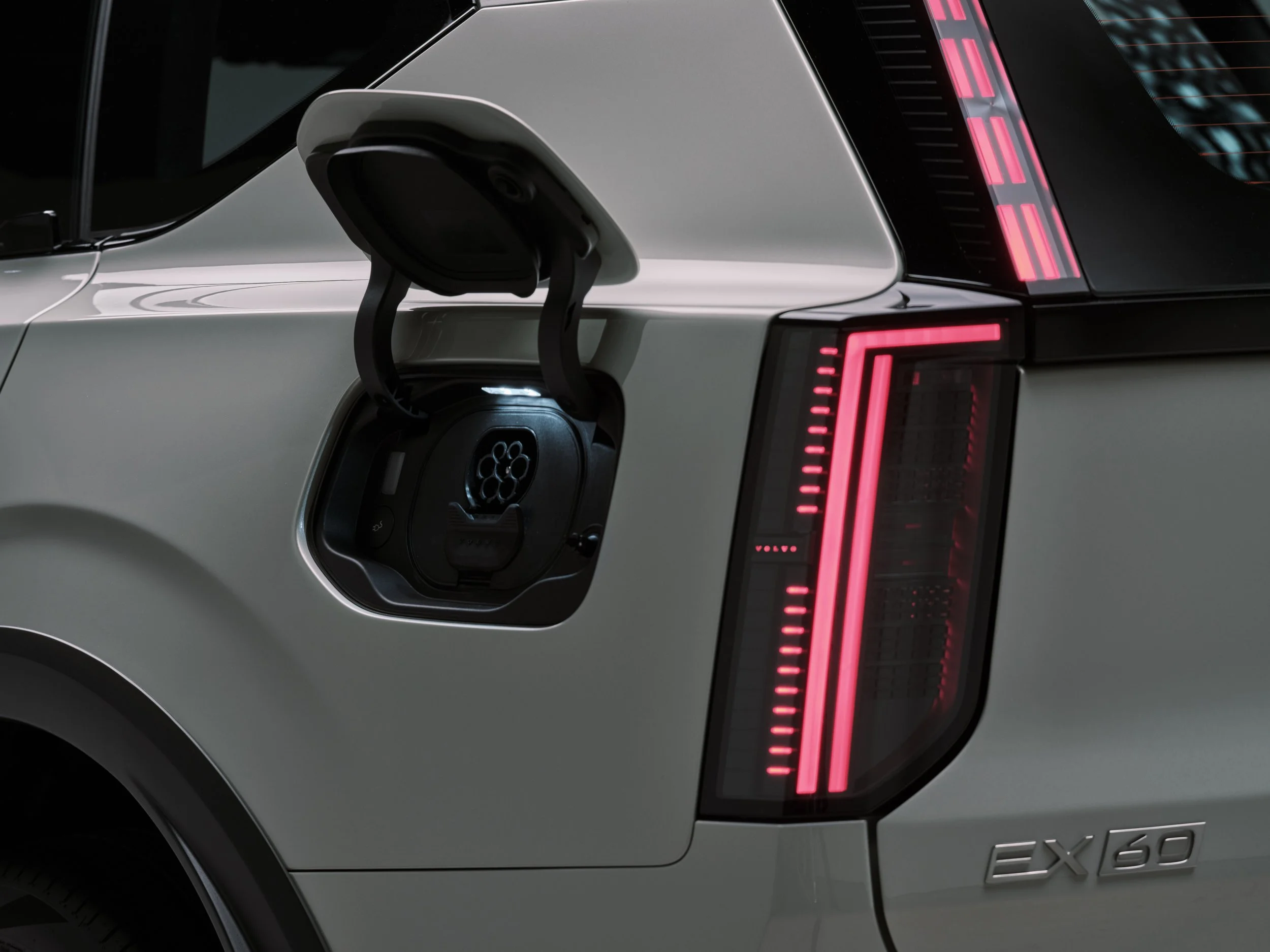
The new Volvo EX60, enabled by Breathe’s adaptive charging software
What drivers actually experience
For drivers, the benefits are simple and tangible. “It just feels like the car is less sensitive to the cold,” says Tomas Juergensen, Product Manager for Breathe Charge, the company’s algorithm-enabled charging software.
The complexity of battery management happens invisibly in the background, while drivers experience faster, more predictable charging without needing to change how they plan journeys or interact with the vehicle.
Volvo reports that cold-weather testing in Sweden delivered charging speeds up to 48% faster at around 0°C when adaptive charging was enabled, with significantly reduced 10–80% charge times across several models.
A broader shift towards intelligent battery systems
Beyond immediate performance gains, the article situates adaptive charging within a wider industry shift towards more intelligent battery systems. Analysts point to a future where vehicles can autonomously anticipate charging intent, dynamically balance performance and battery health, and make better use of available energy, including waste heat from the cabin.
What’s clear is that solving winter charging challenges does not require waiting for entirely new battery chemistries. Smarter software and deeper insight into battery behaviour can unlock meaningful improvements today.
As EV adoption accelerates, rethinking how batteries are managed rather than relying solely on preconditioning may prove essential to delivering the reliable, confidence-building experience drivers expect, whatever the weather.